

 |
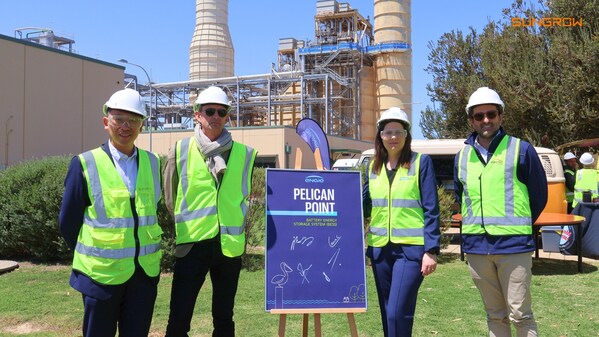
ADELAIDE, Australia, Dec. 9, 2025 /PRNewswire/ — Sungrow, the leading global PV inverter and energy storage system provider, marked the official commencement of construction of client ENGIE’s Pelican Point BESS at Pelican Point Power Station, together delivery partners Elecnor and Electranet. This landmark utility-scale project is designed to further strengthen South Australia’s renewable-rich power grid.
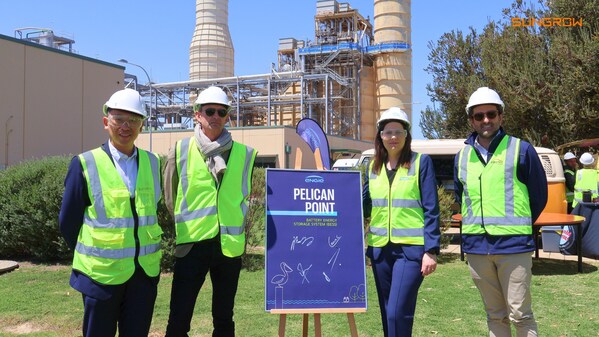
Pelican Point BESS Construction in South Australia
Situated next to the Pelican Point Power Station in Outer Harbour, Adelaide, the 200 MW / 400 MWh BESS is currently in development and is expected to begin operation in the second half of 2027. South Australia already leads the world in renewable energy penetration, but the state’s rapid shift to wind and solar has also introduced new operational challenges, including increasing system strength risks, frequency volatility, and the need for fast-response capacity during periods of high renewable output and low synchronous generation. The Pelican Point BESS is designed to effectively address these challenges by providing large-scale storage, grid stability services, and improved system resilience for the wider network. Once completed, the system will have the capacity to store and discharge enough to power more than 29,400 average South Australian Homes.

Construction of the 200 MW / 400 MWh Pelican Point BESS has begun
- First Grid-Forming BESS to Support South Australia’s Clean Energy Transition
South Australia continues to lead the nation in renewable energy adoption, but high penetration of solar and wind generation brings challenges for grid stability and reliability. The Pelican Point BESS is designed to manage this variability and maintain grid strength during periods of peak renewable output. The project also demonstrates how existing energy infrastructure can be modernised and repurposed to support the evolving needs of a decarbonised power system which is an important milestone for both ENGIE and Sungrow.
For Sungrow, Pelican Point is the company’s first grid-forming BESS project in South Australia. It showcases advanced technical capabilities needed to maintain system strength under high renewable penetration. Located next to the Pelican Point Power Station, the project uses a complementary hybrid operational model where the upgraded gas plant and the new battery system work together to support flexible and reliable energy delivery.
- Technical Highlights: PowerTitan 2.0 and Grid-Forming Innovation
The project will deploy a suite of integrated Sungrow technologies engineered for utility-scale performance and reliability, including:
-
- Grid-Forming Capability for Superior Support: An integrated skid with inverters, MV transformers and RMU, delivering advanced bidirectional power conversion with grid-forming capability. The SC6900UD-MV Power Conversion System (PCS) inverters are well-suited for utility-scale applications, supporting robust grid services and high efficiency.
- Pre-Integrated solution for Long-Term Value: Featuring high energy density, liquid cooling, and advanced battery management, the ST5015UX Battery Containers from the PowerTitan 2.0 Series ensure reliability, safety, and a long cycle life. These pre-assembled, factory-tested containers enable accelerated onsite installation and minimize system integration risk.
- Agile-Dispatching for Market and Grid Requirements: The PPC EMS3000 Plant Controller provides comprehensive plant control, monitoring, and grid integration services. The EMS is designed for scalable, utility-class storage plants and ensures the system can respond to market signals, grid stability requirements, and site-specific operational needs.

Sungrow and ENGIE Commence Pelican Point BESS Construction
- Strengthening Australia’s Energy Future Through Partnership
ENGIE’s partnership with Sungrow highlights strong confidence in Sungrow’s global BESS expertise and technology leadership. Together, the partners will deliver the project to the highest standards of performance, safety, and operational excellence.
“The Pelican Point BESS marks an important step in Australia’s clean energy evolution. By combining Sungrow’s advanced grid-forming technology with ENGIE’s commitment to a carbon-neutral future, we’re delivering a solution built for today’s needs and tomorrow’s energy system. We’re proud to support South Australia as it continues to lead Australia in renewable integration.” Joe Zhou, Country Director of Sungrow Australia stated.
With development underway and commissioning set for the second half of 2027, the Pelican Point BESS is poised to become a key asset in South Australia’s energy transition. Long term, it will enable deeper renewable integration, greater grid flexibility, and support future hybrid energy models.
About Sungrow
Sungrow, a global leader in renewable energy technology, has pioneered sustainable power solutions for over 28 years. As of June 2025, Sungrow has installed 870 GW of power electronic converters worldwide. The Company is recognized as the world’s most bankable PV inverter and energy storage company (BloombergNEF). Its innovations power clean energy projects across the globe, supported by a network of 520 service outlets guaranteeing excellent customer experience. At Sungrow, we’re committed to bridging to a sustainable future through cutting-edge technology and unparalleled service. For more information, please visit: www.sungrowpower.com/en.
About ENGIE
ENGIE is a major player in the energy transition, whose purpose is to accelerate the transition towards a carbon-neutral economy. With 98,000 employees in 30 countries, the Group covers the entire energy value chain, from production to infrastructures and sales. ENGIE combines complementary activities: renewable electricity and green gas production, flexibility assets (notably batteries), gas and electricity transmission and distribution networks, local energy infrastructures (heating and cooling networks) and the supply of energy to individuals, local authorities and businesses. Every year, ENGIE invests more than €10 billion to drive forward the energy transition and achieve its net-zero carbon goal by 2045.
Media Contact:
Luly Wang
luly.wang@sungrow-hq.com